House of Consolation

“In 1958, Harry Harlow demonstrated that tactile stimulation can be more desirable than food”
Archstoyanie Festival, Nikola-Lenivets, Russia, 2018 (concept)
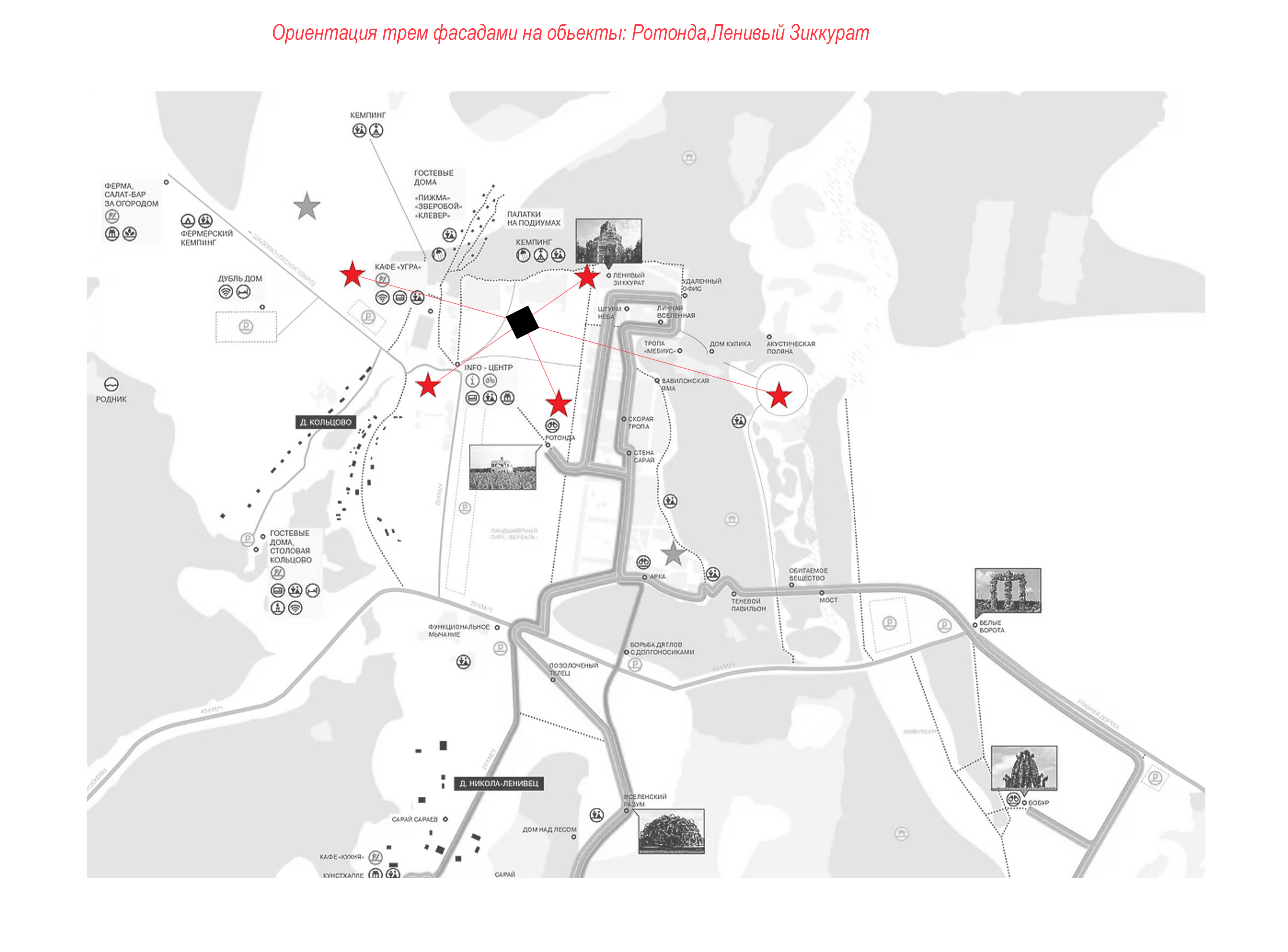
I developed this proposal for Archstoyanie 2018, Russia's largest land art and architecture festival at the Nikola-Lenivets art park in the Kaluga Region. That year's theme invited participants to rethink rituals — their meaning, origins, and what they conceal. The project was never built, but it remains a meaningful concept for me.I worked on this design as a proposal for Archstoyanie 2018, Russia's largest land art and architecture festival, held at the Nikola-Lenivets art park in the Kaluga Region. That year's theme invited participants to rethink rituals, what they mean, where they come from, and what they conceal. The project was not realized, but it remains a meaningful concept for me.
Every surface—walls, ceiling, floor—is covered in plastic pacifiers. The visitor enters a space of artificial feeding: a semantic environment that makes visible the mechanisms of adult consolation.
The project draws on Freud's oral phase of psychosexual development and Eric Berne's transactional analysis to frame adult comfort rituals, such as drinking, smoking, snacking, scrolling, chattering, as extensions of the infant's sucking reflex.
Every surface—walls, ceiling, floor—is covered in plastic pacifiers. The visitor enters a space of artificial feeding: a semantic environment that makes visible the mechanisms of adult consolation.
The project draws on Freud's oral phase of psychosexual development and Eric Berne's transactional analysis to frame adult comfort rituals, such as drinking, smoking, snacking, scrolling, chattering, as extensions of the infant's sucking reflex.
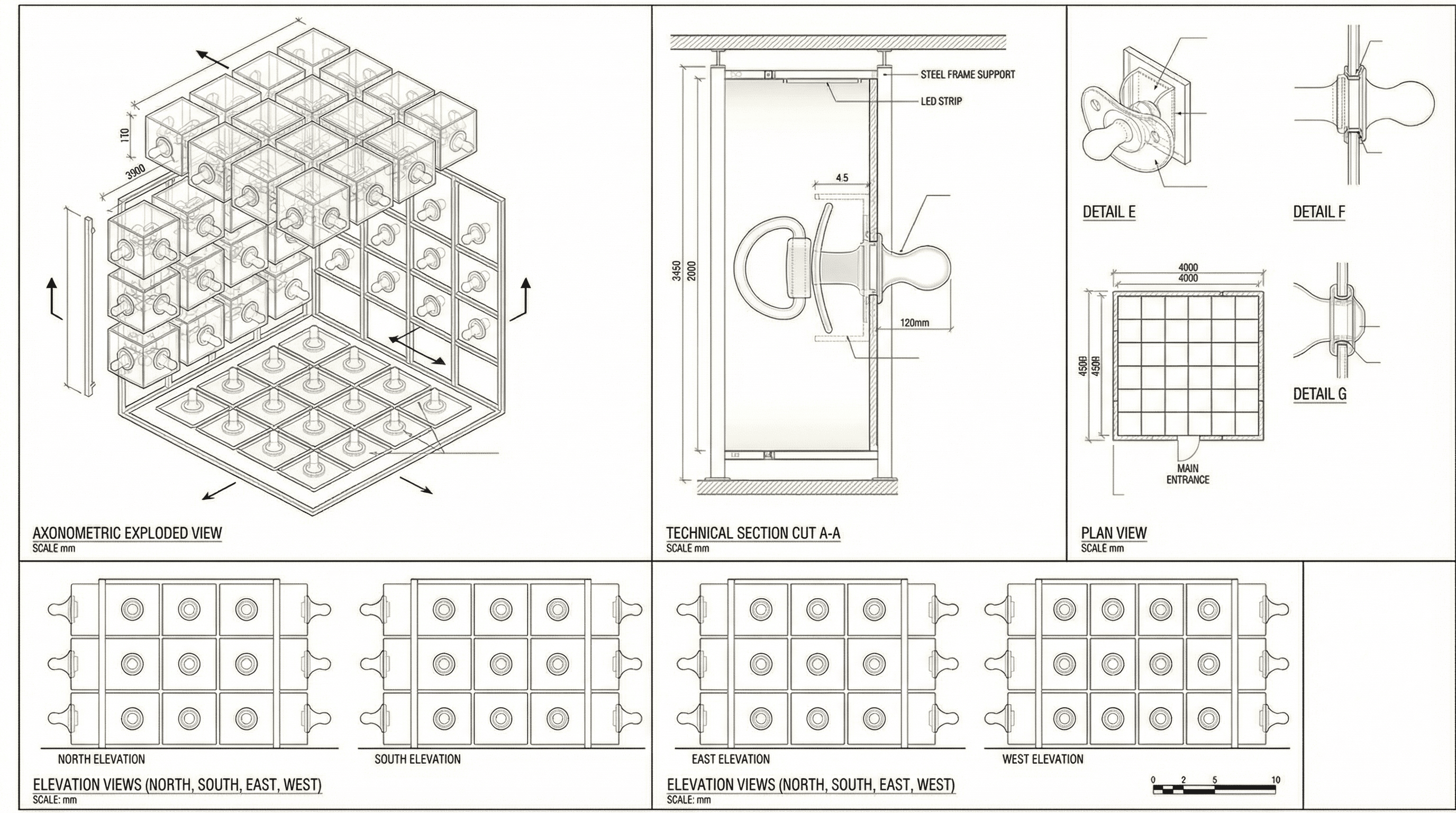
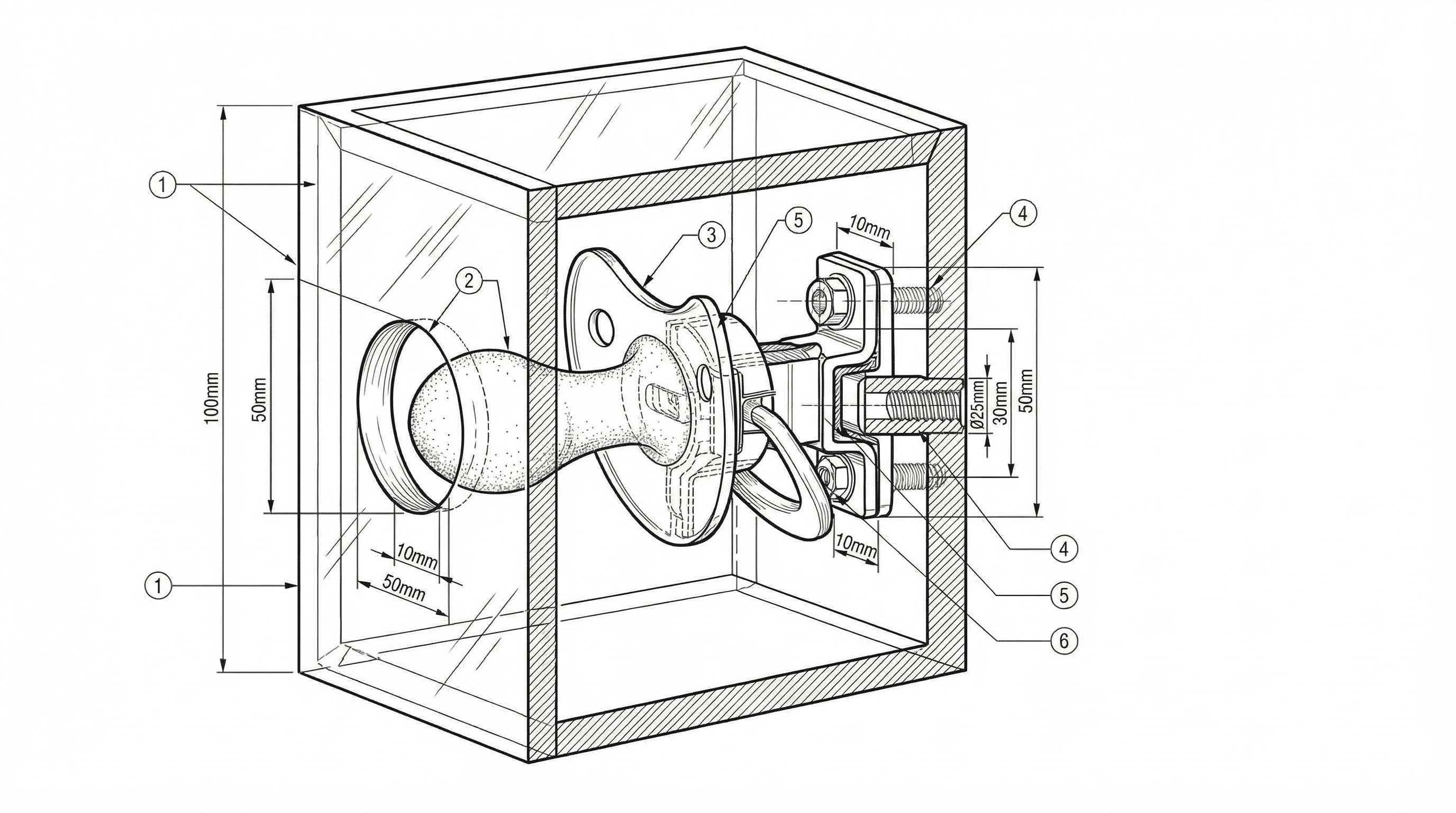
The pacifier wall system: plastic pacifiers mounted at the center of transparent acrylic cubes, with soft nipples protruding outward through the surface. The visitor encounters a continuous tactile field across all surfaces: walls, ceiling, and floor.
Console Your Child
Artificial feeding. With promises, possessions, social media. People in search of feeding (read: "consolation").
A ritual is a stereotypical series of simple complementary interactions, programmed by external social forces. The form of a ritual is shaped by Parental influence in the form of tradition, though in trivial matters, newer albeit less enduring "parental" influences may also exert their effect.The ritual of owning more property than necessary; the ritual of proving one's significant Ego.
A human is born and discovers their helplessness only from the moment their needs for food, warmth, and contact go unmet. All these needs are satisfied jointly with the mother in the act of breastfeeding, which is the most emotionally significant event of life at this developmental phase. The primary body zone responsible for receiving pleasure at this moment is the oral zone. This is why Freud called the first phase of a child's psychosexual development the oral phase.
For oral Consolations, an entire market of pleasures and entertainments has been developed.
Artificial feeding. With promises, possessions, social media. People in search of feeding (read: "consolation").
A ritual is a stereotypical series of simple complementary interactions, programmed by external social forces. The form of a ritual is shaped by Parental influence in the form of tradition, though in trivial matters, newer albeit less enduring "parental" influences may also exert their effect.The ritual of owning more property than necessary; the ritual of proving one's significant Ego.
A human is born and discovers their helplessness only from the moment their needs for food, warmth, and contact go unmet. All these needs are satisfied jointly with the mother in the act of breastfeeding, which is the most emotionally significant event of life at this developmental phase. The primary body zone responsible for receiving pleasure at this moment is the oral zone. This is why Freud called the first phase of a child's psychosexual development the oral phase.
For oral Consolations, an entire market of pleasures and entertainments has been developed.
Return to your Child
As adults, we can return to the pleasures of oral sexuality through kissing, oral caressing of the breast and other body parts. When oral needs are insufficiently satisfied in infancy, an adult may develop various compulsions: a desire to constantly chew something, alcohol, drugs, smoking.. sometimes this transforms into a passion for chattering, or into the choice of a profession as an orator or lecturer. The sucking reflex itself persists in disguised forms throughout adult life: sipping coffee, drawing on a cigarette, nursing a drink through a straw, even the absent-minded chewing of a pen cap. Each act recapitulates the infant's original gesture of seeking nourishment and comfort at the breast.
The House of Consolation is a place of artificial feeding of the Adult. The walls consist of plastic pacifiers, a semantic continuation of feeding the Adult Child, but with a substitute for natural maternal care rather than the care itself. The Adult is invited into the House to uncover and confront the essence of their own rituals. All surfaces in the House—walls, ceiling, floor—are covered with plastic pacifiers, symbolizing the continuity and dictatorial nature of Consolation.
But does the Adult truly perform no rituals inside the House of Consolation? Despite the seemingly formal presence of the pacifiers, they nonetheless create tactile contact, a kind of conversation, a sense of texture, which is itself a ritual of pleasure derived from the feeling that the Adult is safe. This can be compared to a firm embrace, which we find pleasant because the one embracing us touches our shoulder blades, as if shielding them. This same process occurred in the womb: it is precisely with the shoulder blades that the fetus touches the uterine wall.
The semantic field of "Oral Consolation," its rituals: the bar, alcohol, gluttony, promiscuity, drugs, tobacco smoking, talkativeness—the receptive acceptance of artificial external care.
As adults, we can return to the pleasures of oral sexuality through kissing, oral caressing of the breast and other body parts. When oral needs are insufficiently satisfied in infancy, an adult may develop various compulsions: a desire to constantly chew something, alcohol, drugs, smoking.. sometimes this transforms into a passion for chattering, or into the choice of a profession as an orator or lecturer. The sucking reflex itself persists in disguised forms throughout adult life: sipping coffee, drawing on a cigarette, nursing a drink through a straw, even the absent-minded chewing of a pen cap. Each act recapitulates the infant's original gesture of seeking nourishment and comfort at the breast.
The House of Consolation is a place of artificial feeding of the Adult. The walls consist of plastic pacifiers, a semantic continuation of feeding the Adult Child, but with a substitute for natural maternal care rather than the care itself. The Adult is invited into the House to uncover and confront the essence of their own rituals. All surfaces in the House—walls, ceiling, floor—are covered with plastic pacifiers, symbolizing the continuity and dictatorial nature of Consolation.
But does the Adult truly perform no rituals inside the House of Consolation? Despite the seemingly formal presence of the pacifiers, they nonetheless create tactile contact, a kind of conversation, a sense of texture, which is itself a ritual of pleasure derived from the feeling that the Adult is safe. This can be compared to a firm embrace, which we find pleasant because the one embracing us touches our shoulder blades, as if shielding them. This same process occurred in the womb: it is precisely with the shoulder blades that the fetus touches the uterine wall.
The semantic field of "Oral Consolation," its rituals: the bar, alcohol, gluttony, promiscuity, drugs, tobacco smoking, talkativeness—the receptive acceptance of artificial external care.
References: Sigmund Freud, Three Essays on the Theory of Sexuality (1905); Eric Berne, Games People Play (1964); Karl Abraham, A Short Study of the Development of the Libido (1924); Ashley Montagu, Touching: The Human Significance of the Skin (1971); Otto Fenichel, The Psychoanalytic Theory of Neurosis (1945).